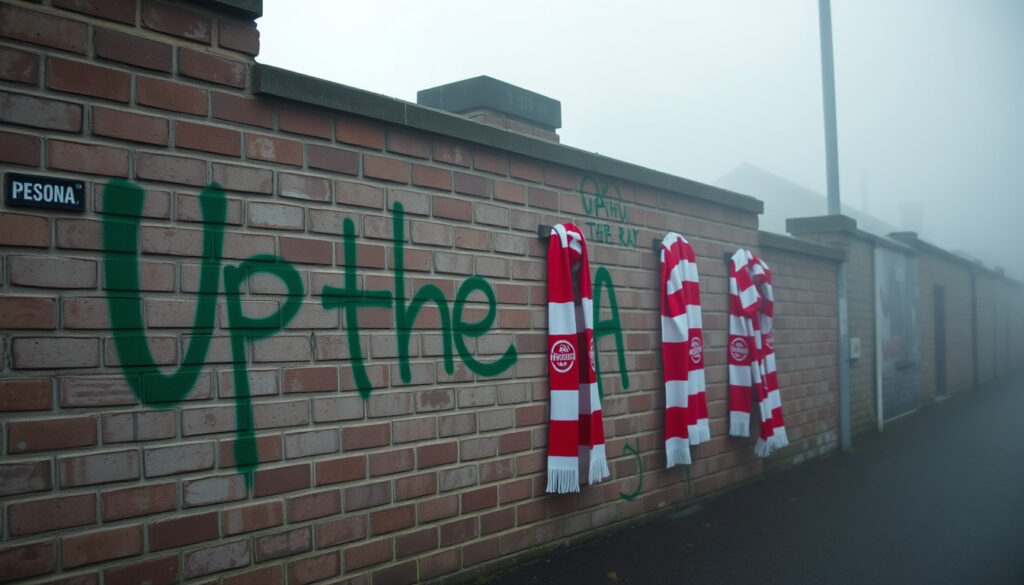
Up the Ra Meaning: Irish Slang Guide & Controversy
If you’ve heard “Up the ‘Ra” shouted at a football match or spotted it in a meme and wondered what’s really behind it, you’re not alone. This three-word phrase sits at a crossroads of Irish history, sporting culture, and online irony—and it means very different things depending on who’s saying it and where. The chant has roots going back to the Troubles, yet it keeps resurfacing in contexts that range from earnest republican pride to casual youth humor. Understanding where it came from and why it sparks debate requires stepping into some genuinely complicated cultural territory.
Primary Reference: IRA (Irish Republican Army) · Common Usage Context: Sports chants for Republic of Ireland · Associated Slogan: Tiocfaidh ár lá · Recent Controversy: Nigel Farage and OSCX incidents
Quick snapshot
- Support for Republican Army (Irish Times)
- Irish sports chant at Republic of Ireland events (Irish Times)
- Offensive to some, particularly Troubles victims
- Recent public incidents have reignited debate
- Dublin vs Northern Ireland interpretations differ
- Extended version: “Ooh ahh up the ‘Ra”
| Label | Value |
|---|---|
| Phrase Origin | Irish republicanism |
| RA Expansion | Republican Army (IRA) |
| Primary Context | Chants at Republic of Ireland events |
| Sectarian Link | Associated with Catholic/nationalist side |
| Key Incidents | OSCX, Nigel Farage |
What does saying “up the ra” mean?
At its most straightforward, “Up the ‘Ra” translates to “Up the IRA”—a chant expressing support for the Irish Republican Army. The phrase has functioned as a rallying call within Irish republican circles for decades, signaling solidarity with the broader goal of a united Ireland. According to Irish Times columnist Una Mullally, the chant means exactly what it sounds like: an expression of backing for an organization that pursued its political aims through violent means. In Irish Times’ October 2022 article, she noted there is a question about whether chanting “up the ‘Ra” is objectively offensive, and the answer is pretty obvious: yes it is, particularly to victims of the Troubles-era IRA violence.
Core definition
- “Up the ‘Ra” literally means “Long live the IRA” or “Victory to the IRA”
- The RA refers to variants of the Irish Republican Army across different eras
- In modern usage, the IRA referenced is typically the Provisional IRA (PIRA), which was involved in violence during the Troubles period from the 1960s through 1998
Literal translation
The phrase operates as a simple declarative: “Up with the Republican Army.” It fits a pattern of other Irish republican slogans, most notably “Tiocfaidh ár lá,” which translates to “our day will come” (Wikipedia). The chant has appeared in graffiti, murals, and public demonstrations throughout Irish republican communities, serving as both a political statement and a cultural marker of identity.
The implication: the phrase carries weight that casual users may not fully appreciate. Even when deployed as a sporting chant, it invokes a legacy of paramilitary violence that directly affected thousands of families.
What does RA mean in Ireland?
In Ireland, “RA” almost always stands for “Republican Army”—the shorthand for the Irish Republican Army and its various factions. The organization has existed in different forms since the early 20th century, with the Provisional IRA (PIRA) becoming the most prominent during the Troubles. The IRA has been described by multiple sources as an internationally recognized terrorist organization for actions carried out during the Northern Ireland conflict (YouTube analysis).
Historical IRA context
The IRA emerged from earlier Irish revolutionary movements, eventually splitting into different factions. The Provisional IRA, formed in 1969, pursued its campaign of violence through the Troubles, using tactics including civilian targeting, intimidation, and murder (YouTube analysis). This history is central to why the chant carries such gravity in Northern Ireland, where direct trauma from the conflict remains within living memory.
Modern interpretations
Today, references to the IRA in casual contexts can mean different things depending on who is speaking. For older generations who lived through the Troubles, it almost always connects to that violent history. For some younger users, the phrase has detached somewhat from its paramilitary origins—though critics argue this represents ignorance rather than genuine separation from the past.
What this means: calling for “up the ‘Ra” in 2024 is not the same as it would have been in 1975—the conflict has ended—but the phrase still invokes the same imagery and carries the same symbolic weight for those who lost loved ones to IRA violence.
What does “up the ra” mean in Irish slang?
Outside its strictly political usage, “Up the ‘Ra” has entered Irish slang, particularly within sporting contexts. The most famous version is the line from the Wolfe Tones’ song “Celtic Symphony,” which contains the lyric “Ooh ah up the ‘Ra” (Irish Times). The Wolfe Tones—often referred to as the “Republican Balladeers” (Western People)—have popularized republican themes through Celtic music for decades.
Slang usage examples
- Chanting at Republic of Ireland football matches after victories
- Singing along to Wolfe Tones songs at concerts or pubs
- Using the phrase in social media captions for Irish pride content
- Some online interpretations claim the phrase functions as playful slang for surprise or exasperation, unrelated to IRA (The Pun Side), though this is contested
Sports and cultural contexts
The chant has appeared in Irish soccer dressing rooms post-victory, generating controversy when reported in media (Irish Times). It also features at Gaelic Athletic Association (GAA) events and in connection with Celtic FC, a club with deep Irish republican connections in Scotland. The 2019 upsurge in young Irish people appropriating Troubles slogans like “Up the ‘Ra” was described as happening in a “purposefully goofy” way (Wikipedia), though the intent behind such usage remains debated.
The chant’s presence in sporting and meme contexts has made it easier for younger people to use it without understanding what they’re invoking. According to Western People, chanting “Up the ‘Ra” shows a total ignorance of recent Irish history and the Troubles.
Does UP the RA support IRA?
By its very definition, yes—saying “Up the ‘Ra” signals republican sympathy and support for the Irish Republican Army. The phrase functions as a declaration of allegiance to the IRA’s aims, regardless of whether the speaker intends a literal endorsement of paramilitary tactics. According to Urban Dictionary, “Up the ‘Ra” is an Irish Republican phrase of support for the Provisional IRA (PIRA).
Direct association
The link between the chant and the IRA is not incidental or metaphorical—it is explicit. Supporters who chant the phrase are aligning themselves with an organization responsible for hundreds of deaths and injuries during the Troubles. In Northern Ireland, saying “Up the RA” can spark heated political debates (YouTube analysis) and risks direct confrontation with those who view the IRA as terrorist murderers rather than freedom fighters.
Generational views
There exists a marked generational schism on this issue. According to Western People, older generations view the chant as glorifying terrorism, while younger generations often see it as catchy or harmless. The Wolfe Tones’ songs have reached younger audiences through streaming and social media, contributing to this generational divide. In the Republic of Ireland, some younger people have dismissed the chant as edgy humor rather than political statement, while in Northern Ireland it remains profoundly sensitive due to direct conflict trauma.
The pattern: young Irish people may chant it as a catchy refrain without fully understanding its ties to paramilitary violence and the families forever affected by IRA actions.
Is “Up the RA” considered offensive by some?
Yes—and emphatically so. The chant is objectively offensive to many, particularly older generations who remember the Troubles and families of victims killed by IRA violence. Irish Times columnist Una Mullally put it directly in 2022: “There is a question about whether it’s objectively offensive to chant ‘up the ‘Ra’, and the answer is pretty obvious: yes it is.” This view is shared by unionist communities and anyone with direct connections to victims of paramilitary violence.
Controversy triggers
The phrase has generated specific high-profile controversies in recent years. The chant has been linked to incidents involving public figures and political controversies, including mentions of figures like Nigel Farage and OSCX in discussions of where the line between sporting passion and political provocation lies.
Regional sensitivity differences
- Northern Ireland: Highly offensive, risks heated political debates and direct conflict due to living memory of Troubles violence
- Republic of Ireland: Sometimes dismissed as edgy humor by youth, though still controversial
- Online spaces: More variable—some platforms treat it as Irish pride content, others recognize its sensitivity
For anyone using “Up the ‘Ra” casually, the stakes are real: in Northern Ireland, the phrase carries the weight of recent trauma and can genuinely escalate tensions. According to YouTube analysis, those unfamiliar with Irish contexts should avoid saying “Up the ‘Ra” to prevent conflict. For those seeking to understand the nuances of this phrase and its impact, exploring local jobs in Ireland offers further insight.
Confirmed facts and what remains unclear
Confirmed facts
- The phrase means “Up with the IRA” and signals support for the organization
- The Wolfe Tones’ Celtic Symphony popularized the chant in its “Ooh ah up the ‘Ra” form
- The chant is genuinely offensive to many, particularly victims of Troubles-era IRA violence
- Younger generations use it differently than those who lived through the conflict
What’s unclear
- Whether modern online meme usage is truly detached from IRA symbolism or still carries subliminal weight
- How widespread the “purposefully goofy” 2019 appropriation truly was outside urban centers
- Whether casual users genuinely don’t know the IRA connection or are performing ignorance
What people are saying
Una Mullally, Irish Times columnist
There is a question about whether it’s objectively offensive to chant “up the ‘Ra”, and the answer is pretty obvious: yes it is.
Western People opinion writer
Chanting ‘Up the RA’ shows a total ignorance of recent Irish history and the Troubles.
The Pun Side, online culture commentary
Online, ‘Up the RA’ has sometimes been used in memes for humor rather than politics, creating a modern interpretation some younger users embrace without awareness of paramilitary origins.
Summary
“Up the ‘Ra” remains one of those phrases that reveals how complicated Irish cultural identity still is. It started as a genuine expression of support for an organization that killed hundreds of people during the Troubles, and for many—particularly in Northern Ireland—it still means exactly that. But through the Wolfe Tones’ music, sporting venues, and internet meme culture, the phrase has also become something else: a catchy Irish expression that younger people deploy without necessarily engaging with its history. Whether that’s a harmless evolution or a troubling trivialization of paramilitary violence depends entirely on who you ask. Western People’s editorial framed it as showing “total ignorance” of recent Irish history, while some online users treat it as little more than a punchy caption for Irish pride content.
For anyone outside Ireland considering using the phrase, the answer seems clearer than for those raised with it: the potential to cause genuine offense to people whose family members were killed by IRA violence far outweighs any benefit from joining in a sporting chant or internet joke. Even if your intent is harmless, the symbol you’re invoking is not.
Related reading: What is a rain check · Oh Holy Night Lyrics
While ‘up the ra’ carries heavy political weight, the top of the town meaning offers a glimpse into lighter Irish social customs and confusions with classic greetings.
Frequently asked questions
What is ooh ahh up the ra?
The phrase comes from the Wolfe Tones’ song “Celtic Symphony,” which includes the lyric “Ooh ah up the ‘Ra.” This extended version has become a popular chant at Republic of Ireland sporting events, often performed before matches or after victories.
What is the ra in Ireland slang?
In Irish slang, “Ra” expands to “Republican Army,” referring to the Irish Republican Army and its various iterations. The term carries deep political significance and is not merely casual slang—it invokes a specific historical and paramilitary context.
Is up the Ra Catholic or Protestant?
The phrase is associated with Catholic/nationalist communities in Ireland, as the IRA historically framed its campaign as defense of Catholic communities against discrimination and for a united Ireland. It is not used in Protestant/unionist contexts, where it would be profoundly offensive.
What is the up the ra meme?
Online, “Up the ‘Ra” has appeared in meme formats alongside Irish pride content, Celtic FC posts, and humorous takes that treat the phrase as simply catchy Irish expression rather than political statement. This meme usage has contributed to generational misunderstanding of the phrase’s origins.
What is the Up the Ra controversy?
The controversy centers on whether chanting “Up the ‘Ra” is appropriate when the IRA was responsible for deaths during the Troubles. Critics argue it glorifies terrorism; supporters either embrace the paramilitary legacy or claim ignorance of it. High-profile incidents at sporting events and in public discourse keep the debate active.
What does up the ra mean in relation to Nigel Farage?
References to Nigel Farage connect to broader debates about political figures and inflammatory rhetoric in UK-Ireland contexts. While Farage is British, his political style and the controversies around “Up the ‘Ra” both touch on questions of when sporting or cultural expression crosses into political provocation.
What is the origin of up the ra?
The phrase originates from Irish republican tradition and was popularized in its modern chant form through the Wolfe Tones’ Celtic Symphony. The IRA itself existed since the early 20th century independence era, but the specific chant gained wider cultural currency through music and sporting contexts in the late 20th and early 21st centuries.
More related posts
 Sligo to Dublin Airport Bus: Route 23 Timetable & Fares
 Man City vs SSC Napoli Lineups – Predicted XIs, Injuries, Team News
 E1 Bus Route Dublin Map – Stops, Timetable and Frequencies
 Pogoda na 10 Dni – Complete Guide for Warsaw, Kraków, Gdańsk
 Is There a Virus Going Around at the Moment – Latest Update
 Houses for Sale in Dublin 12: 2025 Prices & Listings
 How to Crochet a Granny Square: Step-by-Step for Beginners
 Classy Short Nail Designs: Elegant Ideas for 2026