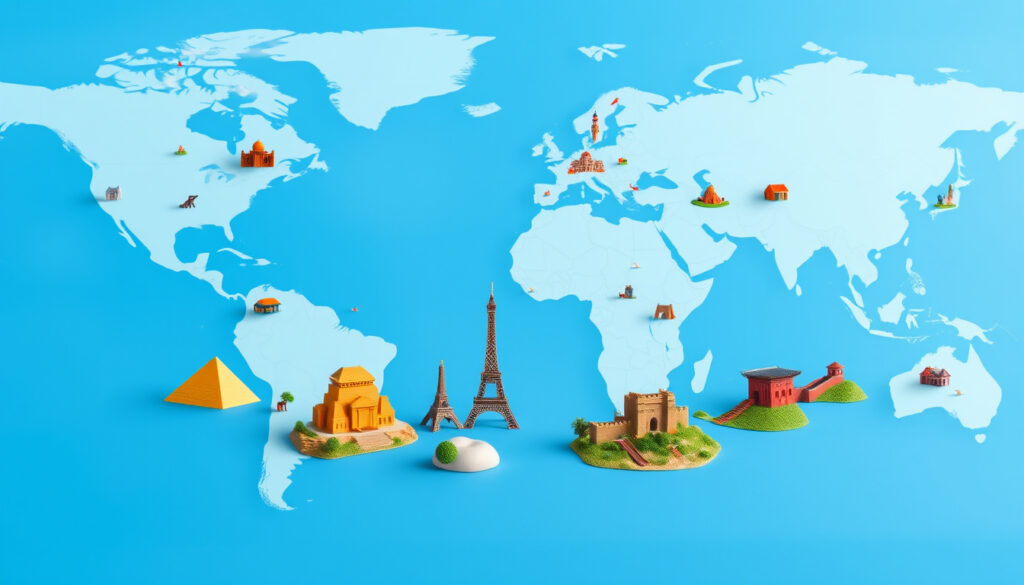
UNESCO World Heritage Sites: Lists, Facts & Common Misconceptions
Few things capture the imagination quite like a place the entire world has agreed is worth protecting. UNESCO World Heritage Sites are exactly that — landmarks and areas of outstanding universal value, from ancient tombs to volcanic islands. Ireland, for instance, has two such sites on the Republic’s territory and a third across the border in Northern Ireland. But not every famous landmark carries the World Heritage label — and the distinction between UNESCO designations matters more than many travelers realize.
Total World Heritage Sites: 1,248 · Countries with sites: 170 · World Heritage Sites in Ireland: 3 · Year first sites inscribed: 1978
The three UNESCO designation programs — World Heritage Sites, Global Geoparks, and Biosphere Reserves — serve different purposes and follow distinct criteria, yet travelers and media routinely conflate them.
| Designation Type | Focus | Examples in Ireland |
|---|---|---|
| World Heritage Site | Cultural or natural heritage of outstanding universal value | Brú na Bóinne, Skellig Michael, Giant’s Causeway |
| UNESCO Global Geopark | Geological heritage management with protection, education, and sustainable development | Burren and Cliffs of Moher, Copper Coast, Cuilcagh Lakelands |
| Biosphere Reserve | Sustainable development and conservation of ecosystems | None yet in Ireland (Kerry is a candidate) |
Quick snapshot
- 1,248 World Heritage Sites exist as of July 2025 (UNESCO World Heritage List (official registry))
- Selection criteria are ten published standards (UNESCO World Heritage Centre (selection criteria authority))
- Ireland has two Republic sites: Brú na Bóinne and Skellig Michael (UNESCO World Heritage Centre – Ireland (state party page))
- The Cliffs of Moher are a UNESCO Global Geopark, not a World Heritage Site (Cliffs of Moher Official Site (geopark explanation))
- Which site is “most beautiful” is subjective and not officially defined
- Exact ranking of top visited sites varies by source and methodology
- UNESCO runs separate designation programs (World Heritage, Geoparks, Biosphere Reserves) — but the criteria interactions are not always clear
- Whether Ireland’s geopolitical status affects Northern Ireland’s separate UNESCO membership
- First sites inscribed in 1978 (12 sites including Galápagos Islands) (UNESCO World Heritage List (inscription history))
- Ireland ratified the convention on 16 September 1991; Brú na Bóinne inscribed 1993, Skellig Michael 1996 (UNESCO World Heritage Centre – Ireland (ratification and inscriptions))
- Burren and Cliffs of Moher Geopark designated in 2015, revalidated every four years (UNESCO – Burren and Cliffs of Moher Geopark (designation details))
- Ireland has tentative sites including The Royal Sites of Ireland awaiting evaluation (UNESCO World Heritage Centre – Ireland (tentative list))
- Geopark status requires revalidation every four years for continued recognition (Burren and Cliffs of Moher Geopark (revalidation process))
Six facts, one pattern: UNESCO runs multiple designation programs that are often confused with each other.
| Property | Value |
|---|---|
| Full name | UNESCO World Heritage Convention |
| Adopted | 1972 |
| Total inscribed properties | 1,248 (as of July 2025) |
| Number of countries with sites | 170 |
| Administered by | UNESCO World Heritage Centre, Paris |
| First sites inscribed | 1978 (12 sites, including Galápagos Islands) |
What is considered a UNESCO World Heritage Site?
Criteria for cultural sites
- Cultural sites must meet at least one of six cultural criteria: represent a masterpiece of human creative genius; exhibit an important interchange of human values; bear a unique testimony to a cultural tradition; be an outstanding example of a type of building or landscape; be an outstanding example of traditional human settlement; be directly associated with events or living traditions of universal significance (UNESCO World Heritage Centre (selection criteria))
- Ireland’s two World Heritage Sites — Brú na Bóinne (1993) and Skellig Michael (1996) — both meet cultural criteria for their archaeological and monastic significance (UNESCO World Heritage Centre – Ireland (state party page))
Criteria for natural sites
- Natural sites must meet at least one of four natural criteria: contain superlative natural phenomena; be an outstanding example of ongoing ecological and biological processes; contain the most important natural habitats for in-situ conservation of biological diversity (UNESCO World Heritage Centre (natural criteria))
- Natural sites on the list include the Great Barrier Reef, Yellowstone National Park, and the Galápagos Islands
Mixed sites
- Mixed sites satisfy both cultural and natural criteria. Examples include the Historic Sanctuary of Machu Picchu (Peru) and the Pyrénées – Mont Perdu (France/Spain). Fewer than 40 of the 1,248 sites are mixed (UNESCO World Heritage List (site types))
The ten criteria are gatekeepers. A site must prove “outstanding universal value” — not just be beautiful or historically interesting. That’s a higher bar than most travelers assume.
The implication: Most famous landmarks you can name are not World Heritage Sites; they simply haven’t met the stringent evidentiary standard.
What is the difference between world heritage and UNESCO?
UNESCO as an organization
- UNESCO is the United Nations Educational, Scientific and Cultural Organization, founded in 1945 (UNESCO (organization mission page))
- It operates dozens of programs beyond World Heritage, including education, science, and culture initiatives
World Heritage as a program
- The World Heritage program is a specific convention adopted in 1972 (UNESCO World Heritage Convention (text and history))
- It has its own World Heritage Committee, budget, and evaluation procedures separate from other UNESCO programs
Other UNESCO designations (Geoparks, Biosphere Reserves)
- UNESCO Global Geoparks are single, unified geographical areas where landscapes of international geological significance are managed holistically (UNESCO – UNESCO Global Geoparks (definition and purpose))
- Biosphere Reserves focus on sustainable development and conservation of ecosystems (UNESCO – Man and the Biosphere Programme (program page))
- World Heritage Sites are only one of three distinct UNESCO site designations. A place can be a Geopark without being a World Heritage Site — like the Burren and Cliffs of Moher
The implication: “UNESCO site” can be misleading. When someone calls the Cliffs of Moher a UNESCO site, they are technically correct about the designation — but it’s a Global Geopark, not a World Heritage Site.
Does Ireland have any UNESCO sites?
List of World Heritage Sites in Ireland
- The Republic of Ireland has two World Heritage Sites: Brú na Bóinne (inscribed 1993) — a Neolithic passage tomb complex older than Stonehenge — and Skellig Michael (inscribed 1996), a remote monastic outpost (UNESCO World Heritage Centre – Ireland (inscribed properties))
- Both are cultural sites; Ireland has no natural World Heritage Site
- The Republic ratified the convention on 16 September 1991 (UNESCO World Heritage Centre – Ireland (ratification date))
Northern Ireland’s sites
- Northern Ireland (part of the United Kingdom) has Giant’s Causeway, a natural World Heritage Site inscribed in 1986 (UNESCO World Heritage Centre – Giant’s Causeway (site page))
- Adding to a total of three on the island of Ireland — two in the Republic, one in the North
- Ireland also has a Tentative List including The Royal Sites of Ireland (proposed for future nomination) (UNESCO World Heritage Centre – Ireland (tentative list))
For travelers planning trips around Ireland’s cultural heritage, it helps to know that the island’s UNESCO World Heritage Sites are all concentrated on the east and west coasts. You can read about Ireland’s national calendar and holidays separate from these designations in our Ireland Public Holidays 2026 guide, which covers the country’s official observances.
Are the Cliffs of Moher a UNESCO World Heritage Site?
Why Cliffs of Moher are not a World Heritage Site
- The Cliffs of Moher are explicitly not on the World Heritage List (Cliffs of Moher Official Site (distinction statement))
- Becoming a World Heritage Site requires a government nomination, a thorough evaluation by advisory bodies, and a vote by the World Heritage Committee — a process that the Cliffs have not gone through
- The site was considered for the Tentative List but its value is classified as geological rather than outstanding universal value under the existing criteria categories
UNESCO Global Geopark status
- The Burren and Cliffs of Moher UNESCO Global Geopark was designated in 2015 and covers 53,000 hectares (530 km²) in County Clare (UNESCO – Burren and Cliffs of Moher UNESCO Global Geopark (official page))
- The geopark protects a 14-kilometre coastline and includes limestone pavements, sea cliffs, and archaeological sites (UNESCO – Burren and Cliffs of Moher UNESCO Global Geopark (description))
- Geopark status must be revalidated every four years (Burren and Cliffs of Moher Geopark (official site))
- Ireland has three UNESCO Global Geoparks: Burren and Cliffs of Moher, Copper Coast, and Cuilcagh Lakelands (formerly Marble Arch Caves, spanning the border) (UNESCO – List of UNESCO Global Geoparks and Regional Networks)
“The Cliffs of Moher are explicitly not on the World Heritage List. The site was considered for the Tentative List but its value is classified as geological rather than outstanding universal value under the existing criteria categories.”
The Cliffs of Moher draw over a million visitors annually — more than Ireland’s two actual World Heritage Sites combined. Popularity does not drive World Heritage inscription; proven universal value does.
What are the top 20 world heritage sites?
Most visited sites
- The Great Wall of China (China), the Great Pyramid of Giza (Egypt), and the Colosseum (Italy) regularly top visitor-count lists
- No official “most visited” ranking exists because UNESCO does not track visitor numbers — figures come from national tourism boards and travel analytics firms
Iconic cultural sites
- Machu Picchu (Peru), Taj Mahal (India), Angkor Wat (Cambodia), and the Historic Centre of Rome (Italy) are among the most recognized
- UNESCO’s list itself is not ranked — each site is equally “inscribed”
Natural wonders
- Natural World Heritage Sites include the Galápagos Islands, Yellowstone National Park, Iguazu National Park, and the Great Barrier Reef
- Travel publications like National Geographic and Lonely Planet curate their own “top 20” lists, but these are editorial, not official UNESCO rankings
The pattern: “Top 20” lists are marketing tools, not UNESCO policy. For personal travel planning, the official World Heritage List — searchable by country and criteria — is the authoritative source (UNESCO World Heritage List (searchable database)).
Clarity check
Confirmed facts
- The total number of World Heritage Sites is 1,248 as of July 2025
- Ireland has three World Heritage Sites on the island: Brú na Bóinne, Skellig Michael, and Giant’s Causeway
- Cliffs of Moher are a UNESCO Global Geopark, not a World Heritage Site
What’s unclear
- Which site is “most beautiful” is subjective and not officially defined
- Exact ranking of top visited sites varies by source and methodology
- Future inscriptions depend on government nominations and committee decisions
- UNESCO runs separate designation programs (World Heritage, Geoparks, Biosphere Reserves) — but travelers often conflate them
- Whether the ten criteria are equally applied across cultural and natural domains in practice
“World Heritage sites belong to all the peoples of the world, irrespective of the territory on which they are located.”
— UNESCO World Heritage Centre (mission statement)
The distinction between World Heritage and other UNESCO designations isn’t just bureaucratic trivia. For a country like Ireland, with two World Heritage Sites and three Geoparks — and a cultural identity deeply tied to landscape — understanding the difference shapes everything from tourism strategy to conservation funding. For the traveler planning a trip, the choice is clear: aim for a World Heritage Site if you want the globally recognized “outstanding universal value” badge, but don’t skip the Geoparks — they hold landscapes no less extraordinary. For Ireland’s heritage authorities, the implication is equally direct: advance tentative sites like The Royal Sites of Ireland onto the World Heritage List, or continue building the Geopark network that already covers the Burren and the Copper Coast. Either path requires clear public understanding of what “UNESCO site” actually means.
authenticvacations.com, mournegullionstrangfordgeopark.com, facebook.com, heritageireland.ie, en.wikipedia.org, en.wikipedia.org, ireland.com
For those interested in how different nations compare, UNESCO sites by country offers a detailed breakdown of the distribution of these cultural and natural treasures.
Frequently asked questions
How many UNESCO World Heritage Sites are there in the United States?
The United States has 25 World Heritage Sites, including natural sites such as Yellowstone National Park and cultural sites like the Statue of Liberty and Independence Hall (UNESCO World Heritage Centre – United States (state party page)).
What is the criteria for a natural World Heritage Site?
A natural site must meet at least one of four criteria: contain superlative natural phenomena, be an outstanding example of on-going ecological and biological processes, contain the most important natural habitats for conservation of biological diversity (UNESCO World Heritage Centre (natural criteria)).
Can a site be removed from the World Heritage List?
Yes. A site can be removed if it loses the characteristics for which it was inscribed. The Arabian Oryx Sanctuary in Oman was the first site deleted in 2007 after poaching and habitat degradation. The Dresden Elbe Valley (Germany) was removed in 2009 due to a bridge construction within the property (UNESCO World Heritage Committee (removal decision)).
How are sites nominated for UNESCO status?
A country must first create a Tentative List of potential sites. Then it prepares a nomination file with detailed justification against the criteria. The file is evaluated by advisory bodies (ICOMOS for cultural, IUCN for natural) before the World Heritage Committee votes at its annual session (UNESCO World Heritage Centre (nomination process)).
What is a tentative list of UNESCO sites?
A Tentative List is an inventory of properties a state party intends to nominate for inscription. It’s the first required step before submitting a full nomination. Ireland’s Tentative List includes The Royal Sites of Ireland (UNESCO World Heritage Centre – Ireland (tentative list)).
Is the Great Wall of China a UNESCO World Heritage Site?
Yes. The Great Wall was inscribed in 1987 as a cultural site under criteria (i), (ii), (iii), (iv), and (vi). It stretches over 20,000 kilometres and was built across several dynasties (UNESCO World Heritage Centre – Great Wall of China (site page)).
What is the most visited UNESCO World Heritage Site?
Visitor rankings are not maintained by UNESCO. Travel industry data often lists the Great Wall of China, the Forbidden City, the Colosseum, and the Pyramids of Giza as among the most visited, but exact numbers vary by source.
What is the difference between a World Heritage Site and a UNESCO Global Geopark?
A World Heritage Site is recognized for “outstanding universal value” in cultural or natural heritage. A UNESCO Global Geopark is a single, unified area where internationally significant geological heritage is managed with a focus on protection, education, and sustainable development. A site can be both (e.g., some Geoparks also contain World Heritage Sites), but most are separate designations (Cliffs of Moher Official Site (geopark definition)).
More related posts
 Morning After Pill Side Effects: What’s Normal and What’s Not
 White Air Force 1: Price, Popularity, and Trend Status in 2025
 Houses for Sale Slane: 2025 Listings & Prices
 Pope Francis Latest News – Health Update and Rumors Debunked
 Houses for Sale in Kilkenny: 61 City & 217 County Listings
 Houses for Sale in Dublin 12: 2025 Prices & Listings
 Irish Brown Bread Recipe: Authentic, Healthy, and Easy
 1414 Angel Number Meaning: Love, Career, Twin Flame Guide