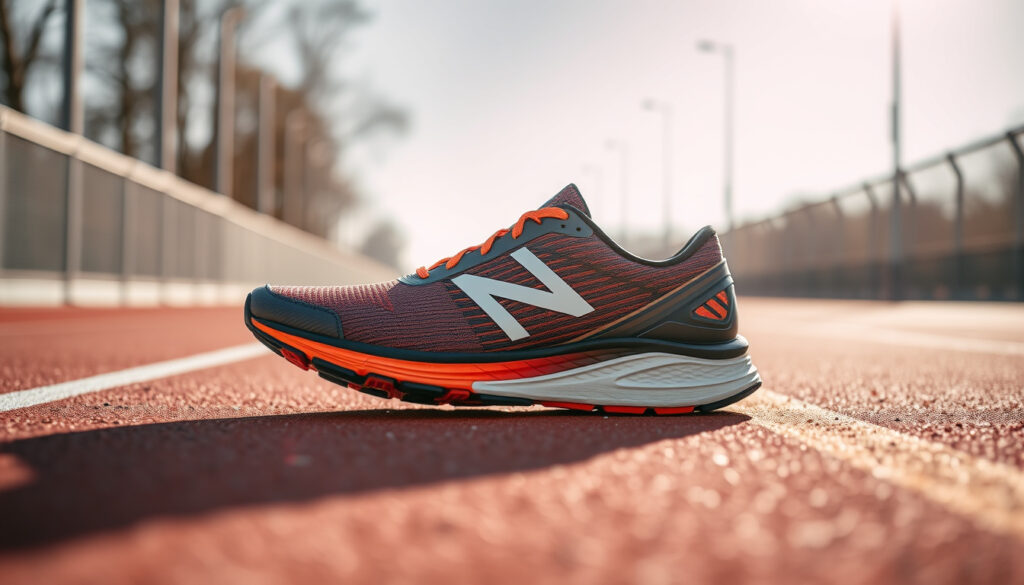
New Balance FuelCell Rebel v5 Review: Versatile Tempo Shoe
The New Balance FuelCell Rebel v5 solves a problem every runner knows: why can’t one shoe do easy days AND tempo work? The v5 sheds the firmer, speed-focused feel of the v4 in favor of plush FuelCell cushioning that handles both — and it costs the same as its predecessor.
Versatility: Easy days to short races · Key Upgrade: Fixes v4 flaws · Foam Type: Plush FuelCell · Weight Profile: Ultra light
Quick snapshot
- v5 upgrades v4 with +5mm stack (Running Shoes Guru)
- Ultra light at ~224g for Men’s US 9 (YouTube Reviewer)
- FuelCell foam in PEBA/EVA blend (Flawless Shoe Reviews)
- Long-term durability after 300+ km
- Marathon performance limits
- Female-specific fit adjustments
- Rebel v4 established as speed trainer (Running Shoes Guru)
- v5 released 2024 with softer, cushioned ride (YouTube Reviewer)
- v5 shifts to daily trainer role
- Better for runs over 30km than v4
- Same price point as v4
| Specification | Value | Source |
|---|---|---|
| Type | Tempo trainer | — |
| Foam | FuelCell | — |
| Plate | None | — |
| Versatility | Road versatile | — |
What is the FuelCell Rebel v5 good for?
The Rebel v5 occupies a versatile middle ground — it’s responsive enough for tempo runs but cushioned enough for easy days. Reviewers note that the v5 “feels more like a daily trainer than a speed trainer” due to its softer, more cushioned ride compared to the firmer v4 (Running Shoes Guru). The +5mm stack increase over v4 directly enabled this shift toward everyday versatility (Runnea).
Tempo runs
Despite the softer feel, the Rebel v5 maintains enough snap for tempo-paced work. The FuelCell foam delivers a springy response that reviewers compare favorably to the firmer v4 experience. The 6mm drop and 35mm heel / 29mm forefoot stack keep you close to the ground while the PEBA content in the midsole adds energy return.
Easy days
The plush FuelCell blend absorbs road shock better than the v4, making the v5 more comfortable for conversational-paced runs. Analysis from RTINGS.com confirms the v5 is “more forgiving” than the v4’s responsive ride (RTINGS.com). Runners with wider feet benefit from the v5’s roomy toe box while still getting lockdown in the midfoot and heel.
Short races
The Rebel v5 can handle race day duties for 5K to half marathon distances. It lacks a carbon plate, so marathon runners seeking maximum energy return may prefer plated alternatives. However, for shorter distances where efficiency matters without the plate penalty, the v5 delivers a balanced performance.
Is the FuelCell Rebel v5 carbon plated?
No — the Rebel v5 does not include a carbon plate. The shoe relies on its FuelCell foam for propulsion rather than a stiff embedded plate. This design choice aligns with the v5’s positioning as a daily trainer and tempo shoe rather than a pure race-day weapon.
The midsole uses a PEBA/EVA blend (approximately 80% EVA, 20% PEBA) that provides cushioning and moderate energy return without the aggressive pop of carbon-plated race shoes (Flawless Shoe Reviews). This makes the v5 notably different from New Balance’s own FuelCell Supercomp series, which features carbon plates and maximum stack heights.
Runners wanting a carbon-plated New Balance for race day should look at the Supercomp Trainer v2 or Elite v3. The Rebel v5’s lack of a plate keeps weight down and versatility up — that’s the trade-off New Balance made deliberately.
Is the FuelCell Rebel v5 a daily trainer?
Partially — the Rebel v5 serves well as a daily trainer for moderate mileage, but its versatility has limits. Reviewers confirm the v5 is “better for long runs that exceed 30 kilometres” compared to the v4, which struggled with extended distance comfort (Running Shoes Guru).
Daily training suitability
The v5’s engineered mesh upper with improved structure and thicker tongue addresses comfort issues from the v4. Reviewers note the v5 has better lockdown and padding for longer efforts (Running Shoes Guru). The flexible heel counter with minimal padding still works for most runners, though those with Haglund’s deformity or Achilles sensitivity may notice the lack of aggressive heel containment.
Versatility limits
The Rebel v5 sits between a pure tempo shoe and a max-cushion trainer. Runners logging 80+ km per week might still want a higher-stack daily trainer like the ASICS Novablast 5 for recovery days. The v5’s 35mm heel / 29mm forefoot stack provides comfort for most training runs but doesn’t reach the plush heights of max-cushion options.
Increased outsole rubber on the v5 addresses durability concerns from the v4 — a meaningful upgrade for runners accumulating higher mileage. Expect roughly 400-500 km before midsole degradation becomes noticeable.
What is the difference between FuelCell Rebel v5 and Novablast 5?
The Rebel v5 and ASICS Novablast 5 take different paths to cushioning comfort. Rebels v5 measures 35mm heel / 29mm forefoot with 6mm drop, while the Novablast 5 sits higher at 41.5mm heel / 33.5mm forefoot with 8mm drop (Flawless Shoe Reviews). The weight difference reflects this: Novablast 5 weighs 255g (Men’s US 9) versus Rebel v5’s ~224g.
Foam and ride
The Rebel v5 uses FuelCell foam in a PEBA/EVA blend for a springy, responsive feel. The Novablast 5 uses FF Blast+ MAX cushioning for a softer, more cushioned ride that prioritizes plush comfort over snap. Reviewers describe Novablast 5 as “better for long runs, recovery, daily training” while Rebel v4 suited “tempo runs, speed sessions, racing” (Flawless Shoe Reviews).
Weight and stack
The 31g weight gap (Novablast heavier) matters for turnover-focused runners. Rebel v5’s lower stack keeps you closer to the ground for better ground feel, while Novablast 5’s extra cushioning absorbs more impact — useful for heavier runners or those with joint sensitivity. The Rebel v5’s 6mm drop versus Novablast 5’s 8mm drop also affects biomechanics, with lower drops typically favoring midfoot strikers.
Comparing the updated Rebel v5 against Novablast 5: v5 remains more responsive for speed-oriented runs while Novablast stays softer for daily miles. The Novablast’s well-padded heel collar and secure fit make it better for runners with metatarsalgia or neuroma concerns (Flawless Shoe Reviews). Rebels v5 trades some of that plushness for a more versatile, energetic ride.
Which is better Brooks or New Balance FuelCell?
Comparing Brooks running shoes to New Balance FuelCell requires looking at specific models rather than brand-wide. The Brooks Hyperion line represents Brooks’s response to the cushioned tempo trainer market, similar to the FuelCell Rebel positioning.
Rebel v5 vs Hyperion
Brooks Hyperion Elite and Hyperion Tempo compete directly with the FuelCell Rebel series. The Brooks Hyperion Elite 4 features nitrogen-infused DNA Flash foam and a carbon-fiber plate for race-day performance, while the Rebel v5 remains unplated and lighter. Brooks leads in stability-focused shoes with their GuideRails technology, which New Balance doesn’t replicate in the Rebel line.
Key performance edges
Runner testers note that New Balance FuelCell foam typically delivers a snappier, more energetic feel than Brooks’s nitrogen-infused options. Brooks counters with superior midsole durability and their stability solutions for overpronators. For neutral runners seeking versatile road performance, Rebel v5 matches or exceeds Brooks Hyperion Tempo for responsiveness-to-cushion ratio.
Brooks has stronger recognition in stability and support categories, while New Balance leads in lightweight, speed-oriented neutral shoes. Your choice depends on whether you need stability support (Brooks) or versatile cushioning for tempo and easy runs (Rebel v5).
Neither brand dominates across all categories. Runners rotating between easy days and tempo work without needing stability support find the Rebel v5’s versatility and responsive FuelCell foam offer a compelling package that competes favorably with Brooks equivalents.
New Balance FuelCell Rebel v5 vs v4: Detailed Comparison
Two models, two philosophies: the v4 prioritized speed, while the v5 prioritizes everyday comfort. Stack heights tell part of the story — v4 measures 30mm heel / 24mm forefoot versus v5’s 35mm heel / 29mm forefoot (Flawless Shoe Reviews). That 5mm difference transforms the ride from firm and fast to plush and versatile.
| Feature | Rebel v4 | Rebel v5 | Source |
|---|---|---|---|
| Heel stack | 30mm | 35mm | Flawless Shoe Reviews |
| Forefoot stack | 24mm | 29mm | Flawless Shoe Reviews |
| Drop | 6mm | 6mm | Flawless Shoe Reviews |
| Weight (US9) | 218g | ~224g | Flawless Shoe Reviews, YouTube |
| Midsole feel | Firmer, responsive | Softer, plush | Running Shoes Guru |
| Upper | Standard mesh | Engineered mesh, thicker tongue | YouTube Reviewer |
| Stability | More stable | Less stable | Running Shoes Guru |
| Best for | Tempo, speed sessions | Daily training, easy runs | Flawless Shoe Reviews |
The v5 adds 31g over v4 — a trade-off most runners accept for the extra cushioning. Runners preferring the v4’s firmer, more connected ride still have valid reasons to stick with it or buy v4 on clearance.
New Balance FuelCell Rebel v5 Specifications
Understanding the Rebel v5’s specs helps you match it to your running needs and rotation strategy.
| Specification | Value | Notes |
|---|---|---|
| Midsole | FuelCell (PEBA/EVA blend) | 80% EVA, 20% PEBA |
| Heel stack | 35mm | 5mm increase over v4 |
| Forefoot stack | 29mm | 5mm increase over v4 |
| Drop | 6mm | Unchanged from v4 |
| Plate | None | No carbon or nylon plate |
| Weight | ~224g (Men’s US 9) | 31g heavier than v4 |
| Upper | Engineered mesh | Improved structure, thicker tongue |
| Outsole | Increased rubber coverage | Better durability than v4 |
| Heel counter | Flexible, minimal padding | May irritate sensitive Achilles |
| Toe box | Wide, breathable | Roomier than v4 |
Pros and Cons
Upsides
- Versatile enough for easy days and tempo runs
- Plush FuelCell cushioning without the weight penalty
- Improved upper with better lockdown than v4
- Same price point as the v4
- Increased outsole rubber addresses durability
- Roomy toe box accommodates wider feet
Downsides
- No carbon plate limits marathon race-day appeal
- Less stable than the v4 for speedwork
- Flexible heel counter may irritate sensitive Achilles
- 31g heavier than v4
- Not ideal for runners needing maximum cushion
- Female-specific fit data limited
Analysis from The Run Testers notes the Rebel v5 as a “2024 favorite update” that successfully addresses the v4’s comfort limitations while maintaining enough responsiveness for quality training runs.
RTINGS.com testing confirms the v5 is “plusher, more forgiving” than the v4, making it better suited for runners seeking a daily trainer that doesn’t sacrifice all speed feel (RTINGS.com testing).
The Rebel v5 targets a specific gap in many runners’ rotations: a shoe that handles easy runs comfortably but still responds when you want to pick up the pace. It’s not the fastest shoe in New Balance’s lineup, nor is it the cushiest — but it occupies useful territory between those extremes.
For runners rotating a marathon race shoe, a daily trainer, and a tempo shoe, the Rebel v5 can serve double duty as both easy-day and tempo shoe, reducing the required rotation to two shoes rather than three. That efficiency appeals to runners who travel light or train without access to multiple pairs.
The 3-shoe rule (easy day, tempo/speed, race) remains ideal for serious runners, but the Rebel v5 bridges enough gaps that casual runners or those building mileage might comfortably run it as a single shoe. The trade-off is accepting that no single shoe excels at everything — the Rebel v5’s strength is competence across use cases rather than dominance in any single one.
Related reading: New Balance Rebel v5 vs v4 · New Balance Rebel v5 vs ASICS Novablast 5
The FuelCell Rebel v5 trades the v4’s razor-sharp speed for high-mileage accommodation, just as outlined in this v4 specs comparison from early testers.
Frequently asked questions
What is the 3 shoe rule?
The 3-shoe rule suggests runners rotate three types of shoes: a daily trainer for easy and recovery runs, a tempo or speed shoe for intervals and faster efforts, and a race shoe (typically with carbon plate) for competition. Some runners add a fourth shoe for trail or stability needs.
Can New Balance Rebel v5 be used for a marathon?
Yes, the Rebel v5 can complete a marathon, but it’s not optimized for that distance. Without a carbon plate, runners seeking maximum energy return over 42.2 km may prefer a plated race shoe. The Rebel v5 works best for marathons as a training shoe leading up to race day or for recreational runners not chasing personal records.
What are New Balance FuelCell Rebel v5 color options?
Colorways include white, black, and angora (a muted warm tone). New Balance frequently releases seasonal color variations. Check New Balance’s official website or authorized retailers for current availability as colorways rotate seasonally.
How much does New Balance FuelCell Rebel v5 cost?
The Rebel v5 launched at the same price point as the v4. Check current pricing at New Balance retailers as prices may vary by region and during sales events. The v4 may see discounted pricing as retailers clear inventory.
Is there a New Balance FuelCell Rebel v5 Elite?
New Balance does not currently offer a FuelCell Rebel v5 Elite version. The Rebel line’s Elite designation applies to other models in New Balance’s lineup. For a carbon-plated New Balance Elite experience, look at the FuelCell Supercomp Elite v3 instead.
Where can I find New Balance FuelCell Rebel v5 on sale?
Check New Balance’s official outlet, Amazon, RunRepeat, and major running retailers like Fleet Feet, Road Runner Sports, and JackRabbit. Sign up for retailer newsletters for sale alerts. The v4 sees more discounts as retailers clear inventory for the v5.
More related posts
 Funny Elf on the Shelf Ideas: 75+ Pranks for All Ages
 Morning After Pill Side Effects: What’s Normal and What’s Not
 What Is an Adjective? Definition, Examples & Lists
 Part-Time Jobs in Mullingar (2025): Find Local Work
 How to Measure Ring Size at Home: Guide & Charts
 Consumer Rights Act 2022: Your Guide to Irish Consumer Law
 Chest Supported Dumbbell Row: Muscles & Form Tips
 AFL Grand Final 2025: Winner, Score, Time & Tickets