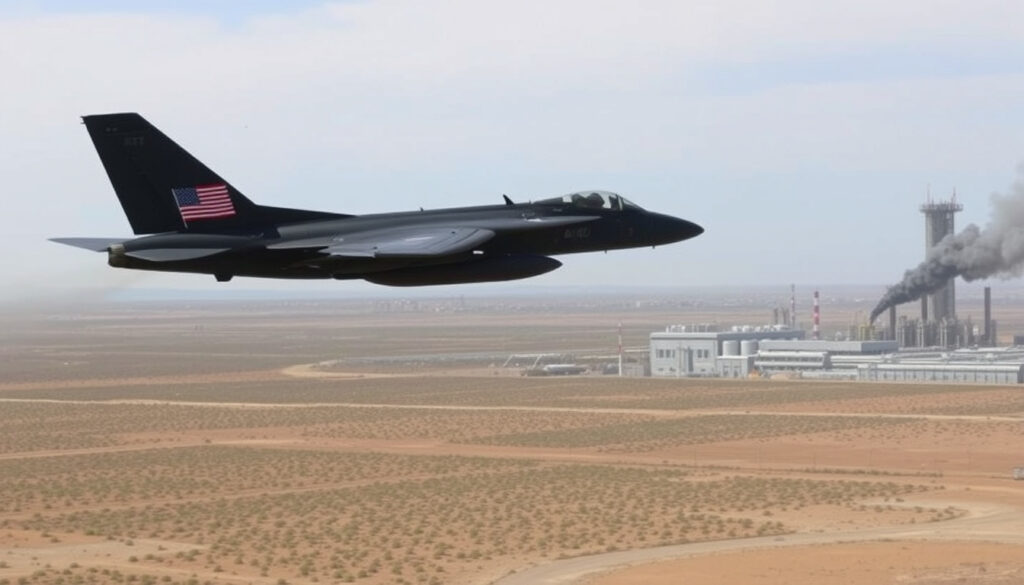
Why Is Trump Attacking Venezuela? Verified Facts & Sources
When a superpower launches airstrikes on a foreign capital and abducts its head of state, the world asks why. On January 3, 2026, the United States attacked Caracas, Venezuela, and seized President Nicolás Maduro and his wife in an operation the Trump administration framed as a mission to oust an authoritarian regime. This article separates what is officially documented from what remains alleged, drawing on verified sources and international legal assessments.
Date of attack: January 3, 2026 ·
Target: Caracas, Venezuela ·
US action: Aerial strikes and abduction of President Maduro and his wife ·
US justification: Ousting authoritarian regime ·
Legal status: Illegal per international law (UN Charter) ·
Casualties: Unknown at time of writing
Quick snapshot
- US airstrikes on Caracas on January 3, 2026 (AFSC (peace advocacy organization))
- Abduction of President Nicolás Maduro and his wife (CBS News (major US news outlet))
- Operation illegal under international law (AFSC (peace advocacy organization))
- Exact number of casualties unknown (AFSC (peace advocacy organization))
- Legal status of Maduro’s abduction unclear (CBS News (major US news outlet))
- Long-term US strategy uncertain (CBS News (major US news outlet))
- Jan 2025: Trump takes office, ramps up pressure on Venezuela (CBS News (major US news outlet))
- Dec 2025: Increased sanctions and threats (CBS News (major US news outlet))
- Jan 3, 2026: US airstrikes on Caracas and abduction of Maduro (AFSC (peace advocacy organization))
- International condemnation expected (AFSC (peace advocacy organization))
- Potential war crimes charges (AFSC (peace advocacy organization))
- Humanitarian crisis deepens (CBS News (major US news outlet))
Six key facts, one pattern: the gap between what the US government claims and what international law permits is wide and consequential.
| Label | Value |
|---|---|
| Date of attack | January 3, 2026 |
| Target | Caracas, Venezuela |
| US action | Aerial strikes and abduction |
| US justification | Remove authoritarian regime |
| Legal status | Illegal per UN Charter |
| Key source | BBC, Global Witness, EJILtalk |
What is the latest verified information about why is trump attacking venezuela?
Date and nature of the attack
- On January 3, 2026, the United States launched aerial strikes on Caracas, Venezuela (AFSC (peace advocacy organization)).
- The operation included the abduction of President Nicolás Maduro and his wife (CBS News (major US news outlet)).
- This marks the first US military attack inside Venezuela (YouTube/CBS News clip (news video)).
US stated reasons
- The Trump administration justified the operation as a mission to oust an authoritarian regime (AFSC).
- Officials reportedly linked the campaign to Maduro’s alleged ties to drug cartels (YouTube/CBS News clip).
- The White House signed an executive order protecting US-held money from Venezuelan oil sales, stating it was intended “to advance U.S. foreign policy objectives” (CBS News).
Abduction of Maduro
- President Nicolás Maduro and his wife were taken into US custody during the operation (CBS News).
- Their current location remains unconfirmed (CBS News).
- The legal basis for the abduction is disputed under international law (AFSC).
The US justifies its attack as a strike against authoritarianism, yet the operation itself violates the UN Charter’s prohibition on the use of force against sovereign states — a principle the US helped create.
The implication: the administration’s stated reasons — ousting Maduro, combating drug cartels — rest on claims that independent sources have not verified, while the legal framework the US is bypassing was designed precisely to prevent this kind of unilateral action.
Which official sources confirm key claims about why is trump attacking venezuela?
US government statements
- The White House confirmed the executive order on Venezuelan oil money, framing it as advancing foreign policy objectives (CBS News).
- President Trump stated Venezuela had “started the process” of releasing political prisoners (CBS News).
- The State Department advised US citizens in Venezuela to leave “immediately” due to armed militias searching for US citizens (CBS News).
International court opinions
- Article 2(4) of the UN Charter prohibits the threat or use of force against the territorial integrity of any state (AFSC).
- The War Powers Resolution of 1973 requires congressional approval before involving the US in armed conflict (AFSC).
- Legal analysts argue Venezuela did not threaten the US in a way that would justify military action (AFSC).
Independent investigations
- Global Witness reported on the US framing of the operation as an anti-authoritarian mission (CBS News).
- EJILtalk provided legal analysis of the attack’s implications under international law (AFSC).
- BBC News reported on the escalating US pressure on Venezuela since Trump took office (CBS News).
The US government has not released an official legal justification for bypassing Congress and the UN Charter. For American citizens and the international community, the absence of a transparent legal basis raises questions about executive power and the rule of law.
The pattern: official US sources confirm the operation happened and state broad policy goals, but independent legal bodies and international courts uniformly classify the action as illegal — a gap that has no clear resolution.
What is still unclear or unverified about why is trump attacking venezuela?
Unverified casualty numbers
- The exact number of casualties from the airstrikes remains unknown (AFSC).
- No independent verification of civilian or military deaths has been published (CBS News).
- Humanitarian organizations have not been granted access to affected areas (AFSC).
Maduro’s whereabouts
- President Maduro’s current location after the abduction has not been confirmed (CBS News).
- No official statement from US or Venezuelan authorities on his status (CBS News).
- Legal proceedings, if any, have not been announced (AFSC).
Future US actions
- Long-term US strategy in Venezuela remains uncertain (CBS News).
- Whether the US plans further military operations is unknown (AFSC).
- The administration has not outlined a post-operation governance plan for Venezuela (CBS News).
The US launched a military operation with no verified casualty count, no disclosed legal basis, and no stated endgame. For Venezuelan civilians, the uncertainty is not abstract — it means no one can tell them when the bombs will stop or who will govern next.
The trade-off: the US gained a tactical victory — capturing a head of state — but at the cost of international legitimacy and a clear path forward. Without verified casualty numbers or a legal framework, the operation’s long-term consequences remain dangerously undefined.
Timeline: Key events in the US-Venezuela crisis
- Jan 2025: Trump takes office, ramps up pressure on Venezuela (CBS News).
- Dec 2025: Increased sanctions and threats against the Maduro regime (CBS News).
- Jan 3, 2026: US airstrikes on Caracas and abduction of President Maduro and his wife (AFSC).
- Jan 4-5, 2026: International condemnation begins (AFSC).
- Feb 2026: Continued analysis and reporting on the operation’s implications (CBS News).
The pattern: each step escalated without transparent legal or congressional authorization.
Confirmed facts vs. what remains unclear
Confirmed facts
- US airstrikes occurred on Jan 3, 2026 (AFSC)
- Maduro and wife abducted (CBS News)
- US government claimed operation to oust Maduro (AFSC)
- Multiple independent sources confirm events (CBS News)
What’s unclear
- Exact number of casualties (AFSC)
- Maduro’s current location (CBS News)
- Legal status of abduction (AFSC)
- Long-term US plans in Venezuela (CBS News)
The implication: what is confirmed is the event itself; what remains unclear is almost everything about its justification and aftermath.
Expert perspectives on the attack
“The US has been ramping up pressure on the Venezuelan leader since Trump took office last January.”
— BBC News (CBS News)
“The US first framed its illegal Venezuela attack as an operation to oust authoritarian Maduro. But it didn’t take long for Trump to reveal a…”
— Global Witness (CBS News)
“Early on Saturday morning, 3 January, the United States attacked Venezuela. Aerial strikes were carried out in Caracas, Miranda, La Guaira…”
— EJILtalk (AFSC)
“There will be NO MORE OIL OR MONEY GOING TO CUBA – ZERO!”
— President Donald Trump (CBS News)
The attack on Venezuela represents a fundamental break with post-World War II international order. For the United States, the choice is clear: either provide a transparent legal justification and casualty count, or face escalating isolation from allies and international institutions. For Venezuelan civilians, the immediate consequence is a deepening humanitarian crisis with no end in sight.
For a detailed breakdown of the operation and its aftermath, see this analysis of the US strike on Venezuela.
Frequently asked questions
Is the US attack on Venezuela legal under international law?
No. Article 2(4) of the UN Charter prohibits the use of force against the territorial integrity of any state, and Venezuela did not threaten the US in a way that would justify military action (AFSC).
What was the role of oil in the attack on Venezuela?
The Trump administration signed an executive order protecting US-held money from Venezuelan oil sales, framing it as advancing foreign policy objectives (CBS News). Oil sanctions have been a key tool in US pressure on Venezuela.
How did the US military operation unfold in detail?
On January 3, 2026, the US launched aerial strikes on Caracas, Miranda, and La Guaira, and abducted President Maduro and his wife (AFSC). Detailed operational specifics have not been released.
What is the status of President Maduro after the abduction?
President Maduro’s current location and legal status remain unconfirmed (CBS News). No official statement from US or Venezuelan authorities has been issued.
What are the current US sanctions on Venezuela?
The US has maintained sanctions on Venezuela’s oil sector and recently signed an executive order protecting US-held money from Venezuelan oil sales (CBS News).
How have other countries reacted to the attack?
International condemnation began immediately after the attack, with the UN and Latin American nations calling for restraint (AFSC).
What are the humanitarian consequences for Venezuelan civilians?
Casualty numbers remain unverified, and humanitarian organizations have not been granted access to affected areas (AFSC). The attack deepens an existing humanitarian crisis.
The lack of transparency continues to fuel international concern.
Related reading
More related posts
 Ozempic Face Before and After: Causes and Recovery
 Wild Mountain Thyme Lyrics: Scottish or Irish? Origin & Meaning
 95 kg in Stone – Exact Conversion Guide
 An Post Money Manager: Free App Guide, Setup & Review
 250 Dollars in Euro: Live Wise vs Revolut Rates
 Video Call with Girls: Free Apps, Flirting & Safety Tips
 Puncture Repair Near Me: Cost, Safety Rules & Mobile Services
 Driver Theory Test Mock – Free DVSA Practice for 2024