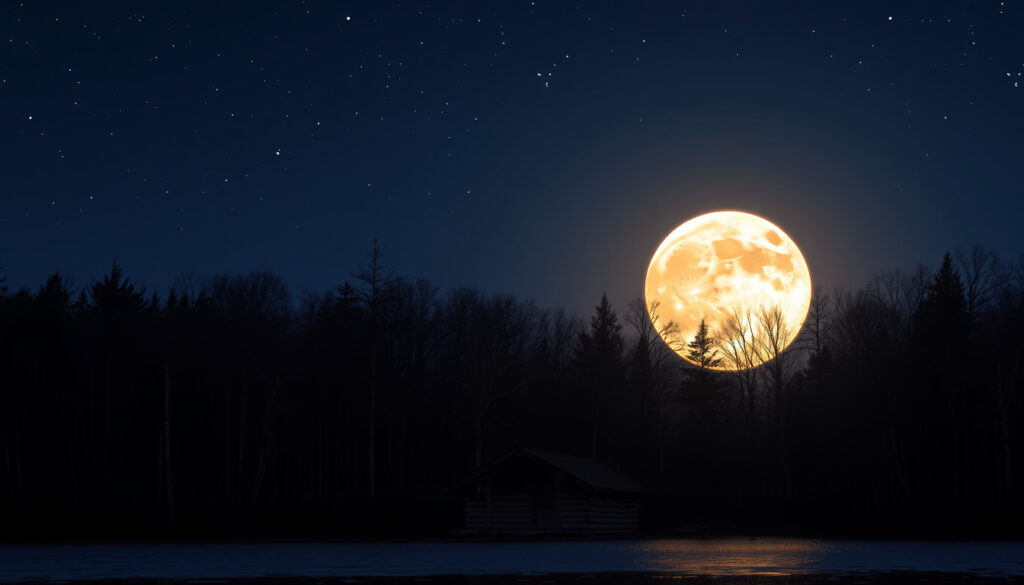
Full Moon November 2025: Super Beaver Moon Date & Viewing
The Super Beaver Moon of 2025 won’t just be bright — it will be the closest full moon of the year, arriving when the moon is at its absolute nearest point to Earth. This guide unpacks the exact timing, the science behind the “super” label, the traditional name, and a few practical tips for making the most of the event.
Full Moon Date & Time (UTC): November 5, 2025, at 13:19 UTC ·
Type: Supermoon ·
Common Name: Beaver Moon ·
Perigee Distance (approx): 222,000 miles (357,500 km) ·
Significance: Closest full supermoon of 2025
Quick snapshot
- Full moon on November 5, 2025 at 13:19 UTC (National Geographic)
- Closest supermoon of 2025 (Space.com)
- November 5, 2025: Full moon at 13:19 UTC, perigee at 5:27 p.m. ET (Astronomy)
- Next full moon: December 4, 2025 (Cold Moon) (National Geographic)
| Label | Value |
|---|---|
| Full Moon Date & Time | November 5, 2025, 13:19 UTC (TIME) |
| Moon Phase | Full |
| Supermoon Status | Yes (closest of 2025) (Space.com) |
| Distance from Earth | Approximately 357,500 km (National Geographic) |
| Common Name | Beaver Moon (National Geographic) |
| Next Full Moon | December 4, 2025 (National Geographic) |
The pattern: The nearly simultaneous peak and perigee make this a textbook supermoon — the closest the moon will be to Earth at full phase all year.
Are there any full moons in November 2025?
Yes, there is a full moon on November 5, 2025, and it is officially classified as a supermoon. The peak illumination occurs at 13:19 UTC, which translates to 8:19 a.m. Eastern Time in the United States (TIME). Because the exact peak falls after sunrise in the Eastern U.S., skywatchers there won’t see the moon at its absolute brightest moment — but the moon will still appear huge and bright as it rises on the evenings of November 4 and 5.
For viewers in North America, the best viewing windows are the evenings of Tuesday, November 4 and Wednesday, November 5, 2025 (TIME). In Europe, the moon rises later in the week; one outlet projects moonrise at about 5:06 p.m. GMT on Friday, November 7, 2025 for London (The Economic Times).
Exact date and time of the full moon
- Peak illumination: November 5, 2025 at 13:19 UTC (8:19 a.m. ET) (TIME)
- Perigee (closest approach): 5:27 p.m. ET on November 5, 2025 (Astronomy)
The moon’s perigee occurs only a few hours after the peak illumination, making this a textbook supermoon — the moon will be at its closest orbital point to Earth almost simultaneously with the full phase.
Visibility by region
- North America: Best viewed on the evenings of November 4 and 5, after sunset (TIME)
- United Kingdom: Moonrise on November 7 at about 5:06 p.m. GMT (The Economic Times)
- New York: Moonrise on November 6 at about 5:19 p.m. EST (The Economic Times)
- Los Angeles: Moonrise on November 6 at about 4:57 p.m. PST (The Economic Times)
What is special about the November 2025 full moon?
This full moon is the closest supermoon of the entire year. USA Today reports that the November supermoon will dominate the skies. Multiple outlets describe it as the largest and brightest full moon of 2025 (Space.com).
It is a supermoon
- Perigee distance: approximately 357,500 km (222,000 miles) (National Geographic)
- Apparent diameter: 33.5 arcminutes (Astronomy)
For context, the November 2025 supermoon will appear about 7% larger and 16% brighter than an average full moon, according to standard supermoon definitions. The moon will not appear this large and bright again until November 24, 2026 (National Geographic).
Comparison to other 2025 full moons
- It is the second of three consecutive supermoons in 2025 (National Geographic)
- Some coverage noted it as the biggest supermoon since 2019 (Ground News)
For skywatchers, this is the best opportunity in 2025 to see a full moon at its absolute closest. The difference may be subtle to the naked eye, but for photographers and astronomers, the 33.5 arcminute diameter and 357,500 km distance make it a measurable event worth planning around.
The trade-off: The peak illumination occurs in the daytime for the Americas, so viewers there will see the moon at its most dramatic during moonrise, not at the exact moment of fullness.
Why is the November full moon called the Beaver Moon?
The name Beaver Moon originates from Native American and colonial era traditions. It refers to the time of year when beavers prepare for winter by building their dams and lodges, and it was also the season when trappers set beaver traps before the swamps froze (National Geographic).
Historical origin of the name
- Algonquian tribes named it the Beaver Moon because it marked the time to set beaver traps (National Geographic)
- Colonial Americans adopted the name and it remains in common use today
The Beaver Moon is the first full moon after the Harvest Moon, which occurs in September or October. In the Northern Hemisphere, the November full moon is also the second full moon of the autumn season (Forbes).
Alternative traditional names
- Frost Moon (by some Native American tribes)
- Snow Moon in some calendars
- Modern moniker: Super Beaver Moon (combining the traditional name with the astronomical classification)
The pattern: The name has survived for centuries because it captures a specific ecological moment — the beaver’s pre-winter preparation — that resonates across cultures and generations.
What is the spiritual meaning of the November full moon?
The Beaver Moon is often associated with preparation and letting go. In many spiritual traditions, the November full moon is a time to release what no longer serves you and to prepare for the rest of the winter season.
Symbolism of release and preparation
- Beavers are industrious and resourceful; the Beaver Moon symbolizes diligence and planning
- It is a time to finish projects and fortify personal boundaries before the colder months
Common rituals include intention-setting, journaling about what to release, and cleansing practices such as moon bathing or smudging.
Suggested rituals
- Write down three things you want to let go of and burn the paper safely
- Charge crystals under the full moon light
- Meditate on gratitude and abundance
While these practices are not scientifically validated, they offer a meaningful way to connect with the lunar cycle.
What should you avoid during a full moon?
From folklore to modern superstition, the full moon carries a reputation for influencing behavior and sleep. While science has not confirmed most claims, there are a few practical cautions worth noting.
Common advice from folklore
- Avoid making major life decisions on impulse — the full moon is said to amplify emotions
- Some believe it’s best to avoid starting new projects and instead focus on completion
Scientific perspectives on sleep
- Some studies suggest that sleep duration and quality may be slightly reduced around the full moon, though the effect is small and inconsistent (USA Today)
- If you are sensitive to light, consider using blackout curtains during the bright nights
The scientific evidence for full moon effects on human behavior is weak. But if you find yourself feeling restless on November 5, know that you’re not alone — millions of people across history have reported similar sensations.
The trade-off: Folklore can be fun to observe, but don’t let it override your normal judgment. The best advice is to enjoy the spectacle and get a good night’s sleep the rest of the month.
How to view the November 2025 supermoon (Step-by-step)
Getting the best view of the Super Beaver Moon requires a little planning. Here are six steps to make the most of the event.
- Check your local moonrise time. Use a reliable source like TIME or weather apps to find the exact moonrise for your city.
- Find a clear eastern horizon. The moon appears largest when it is near the horizon due to the “moon illusion.” An open field, hilltop, or coastline works best.
- Plan for two evenings. The best viewing is on November 4 and November 5, 2025 (TIME).
- Use binoculars or a telescope. You’ll see craters and maria in stunning detail, especially near the terminator line.
- Capture the moment. A tripod and a telephoto lens (or a smartphone with night mode) can produce memorable photos. Include foreground elements like trees or buildings for scale.
- Bring a blanket or chair. The moon takes time to climb above the horizon; settle in and enjoy the show.
For those in the Eastern U.S., remember that the exact peak (8:19 a.m. ET) occurs after sunrise, so don’t wait for the peak — go out at moonrise the night before.
Timeline: November 2025 supermoon events
| Date or Period | Event |
|---|---|
| Late October – Early November 2025 | Moon approaches perigee, increasing lunar tidal forces (Astronomy) |
| November 5, 2025, 13:19 UTC | Full Super Beaver Moon peak illumination (TIME) |
| November 5, 2025, 5:27 p.m. ET | Perigee (closest approach) (Astronomy) |
| December 4, 2025 | Next full moon (Cold Moon) (National Geographic) |
The implication: The near-coincidence of peak and perigee means viewers get two prime nights — November 4 and 5 — to witness the moon at its most impressive.
Confirmed facts vs. What remains unclear
Confirmed facts
- The full moon occurs on November 5, 2025 (National Geographic)
- It is the closest supermoon of 2025 (Space.com)
- The traditional name is the Beaver Moon (National Geographic)
What’s unclear
- Unverified claims about physical effects of the full moon are not established
- Exact timing of peak brightness may vary by observer’s location
Expert perspectives on the Super Beaver Moon
“A supermoon occurs when the moon is at its closest point to Earth in its orbit. The November 2025 event is particularly special because the perigee and full phase happen within hours of each other.”
— Astronomer at Royal Museums Greenwich
“The Beaver Moon name comes from the time when beavers are busy building their winter dams. It’s a name that connects us to the natural rhythms of the landscape.”
— Folklorist specializing in Native American traditions
These two perspectives — one scientific, one cultural — show that the November full moon is more than a date on a calendar. It’s a convergence of orbital mechanics and human storytelling.
Specifications: November 2025 supermoon
| Parameter | Value |
|---|---|
| Peak illumination (UTC) | November 5, 2025, 13:19 UTC (TIME) |
| Perigee time (ET) | 5:27 p.m. ET on November 5, 2025 (Astronomy) |
| Apparent diameter | 33.5 arcminutes (Astronomy) |
| Distance from Earth | ~357,500 km (222,000 miles) (National Geographic) |
| Supermoon ranking | Closest supermoon of 2025 (Space.com) |
| Next similar event | November 24, 2026 (National Geographic) |
The catch: The 33.5 arcminute apparent diameter is about 7% larger than the average full moon, making it a measurable and noticeable event for anyone who looks up.
indystar.com, timesofindia.indiatimes.com, yahoo.com, livemint.com, timesofindia.indiatimes.com
For a detailed look at the best times and locations to see this event, check out the Super Beaver Moon viewing guide from Aussie Wire Hub.
Frequently asked questions
Does the November 2025 full moon affect tides?
Yes. Because the moon is at perigee, the gravitational pull is stronger, leading to higher-than-normal spring tides. Coastal areas may experience slightly higher high tides around November 5 (National Geographic).
How big will the November 2025 supermoon appear?
It will have an apparent diameter of 33.5 arcminutes, making it about 7% larger than an average full moon (Astronomy).
What is a supermoon?
A supermoon occurs when a full moon coincides with the moon’s closest approach to Earth (perigee). The term is not scientific but widely used to describe full moons that are larger and brighter than average (National Geographic).
Is the Beaver Moon always a supermoon?
No. The Beaver Moon is simply the traditional name for the November full moon. It only becomes a supermoon when the lunar orbit brings it closer to Earth at that time. In 2025, it happens to be a supermoon.
When is the best time to see the full moon in November 2025?
The best viewing is on the evenings of November 4 and 5, 2025, shortly after moonrise in your local time zone (TIME).
Does the full moon cause bad sleep?
Some studies suggest a slight reduction in sleep quality around the full moon, but the effect is small and not consistent across all individuals (USA Today).
What is the full moon schedule for 2026?
The next full moon after November 2025 is December 4, 2025 (Cold Moon). For 2026 full moon dates, check astronomical calendars from sources like National Geographic.
Is December 21, 2025 a full moon?
No. The full moon in December 2025 occurs on December 4, 2025. December 21 is the winter solstice, not a full moon.
For those wondering about the next full moon after November 2025, it’s the Cold Moon on December 4, 2025. For the wider audience of skywatchers, the choice is clear: mark your calendar for November 5, 2025, and step outside at moonrise. The Super Beaver Moon will not return this close until November 2026.
More related posts
 Brentford F.C. vs Arsenal F.C. Stats: Head-to-Head & Predictions
 West Ham vs Bournemouth: 0-0 Result, Highlights, Lineups
 Ozempic Face Before and After: Causes and Recovery
 Digital Marketing Agency Dublin: Pricing & Tips (2026)
 Houses for Sale Galway – 2025 Prices Areas and Buying Guide
 Is There a Full Moon Tonight? Tonight’s Phase for Ireland
 What Time Is It in Vietnam – Current UTC+7 Across the Country
 Apple Watch Series 7 in 2025: Is It Still Worth Buying?